

Private stroke rehabilitation in Singapore
Rehabilitation at any stage after a stroke. We come to your home, anywhere in Singapore. Sessions can also be at a clinic, or out in the community.
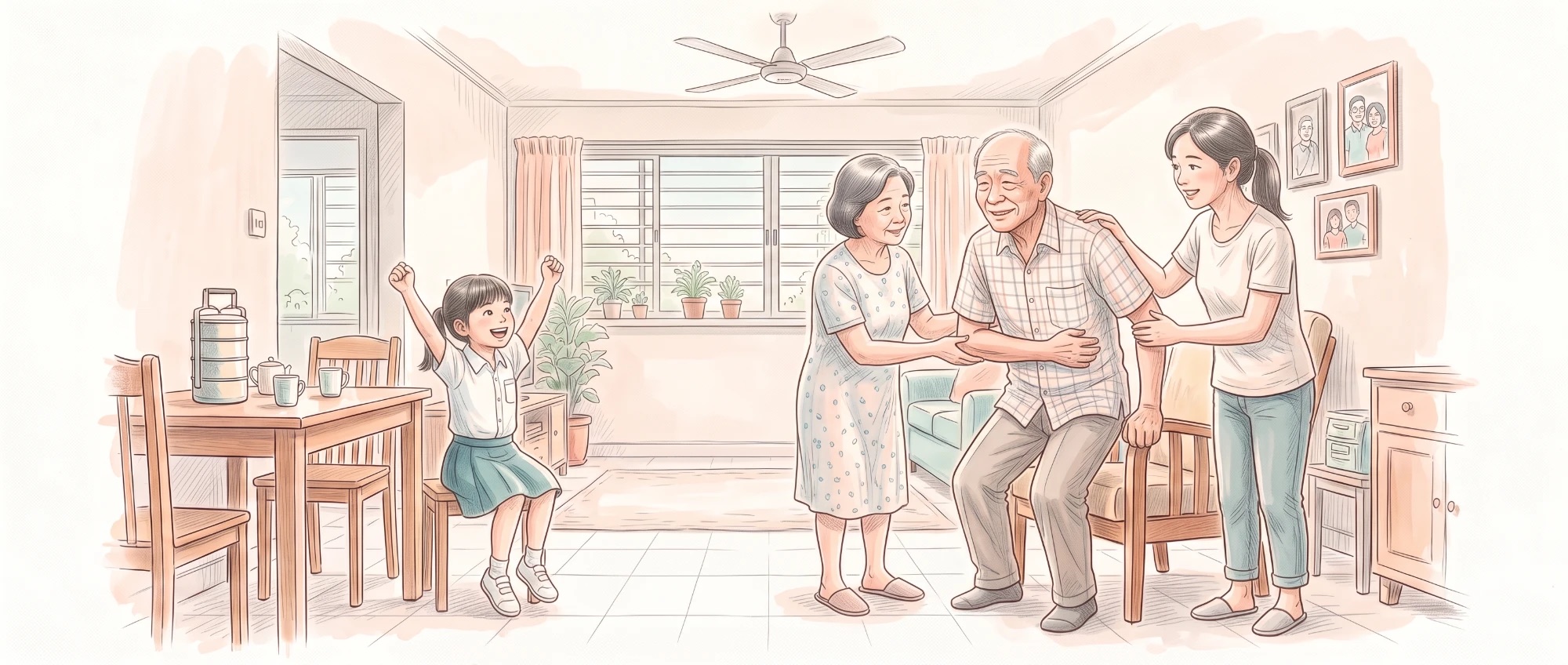
Who is it for?
For anyone who has had a stroke, whether last month or many years ago.
Just home from hospital
- Would like to start intensive rehabilitation to regain function
- Would like to feel more confident with daily activities at home
Having rehabilitation elsewhere
- Would like to add more intensive sessions: more often, longer duration, and closer one to one attention and guidance
- Would like a second opinion
Months or years after a stroke
- Would like a review of what else they could achieve
- Would like to keep improving or maintaining movement, thinking or memory
- Would like to continue challenging themselves / achieving new goals (e.g. to prepare for an overseas hike or pick up a new sport)
Back to work and other responsibilities
- Hoping to get back to work, or to the hobbies they enjoy
- Would like support adjusting to life after a stroke
Where do sessions happen?
We do therapy where it best suits your goals.
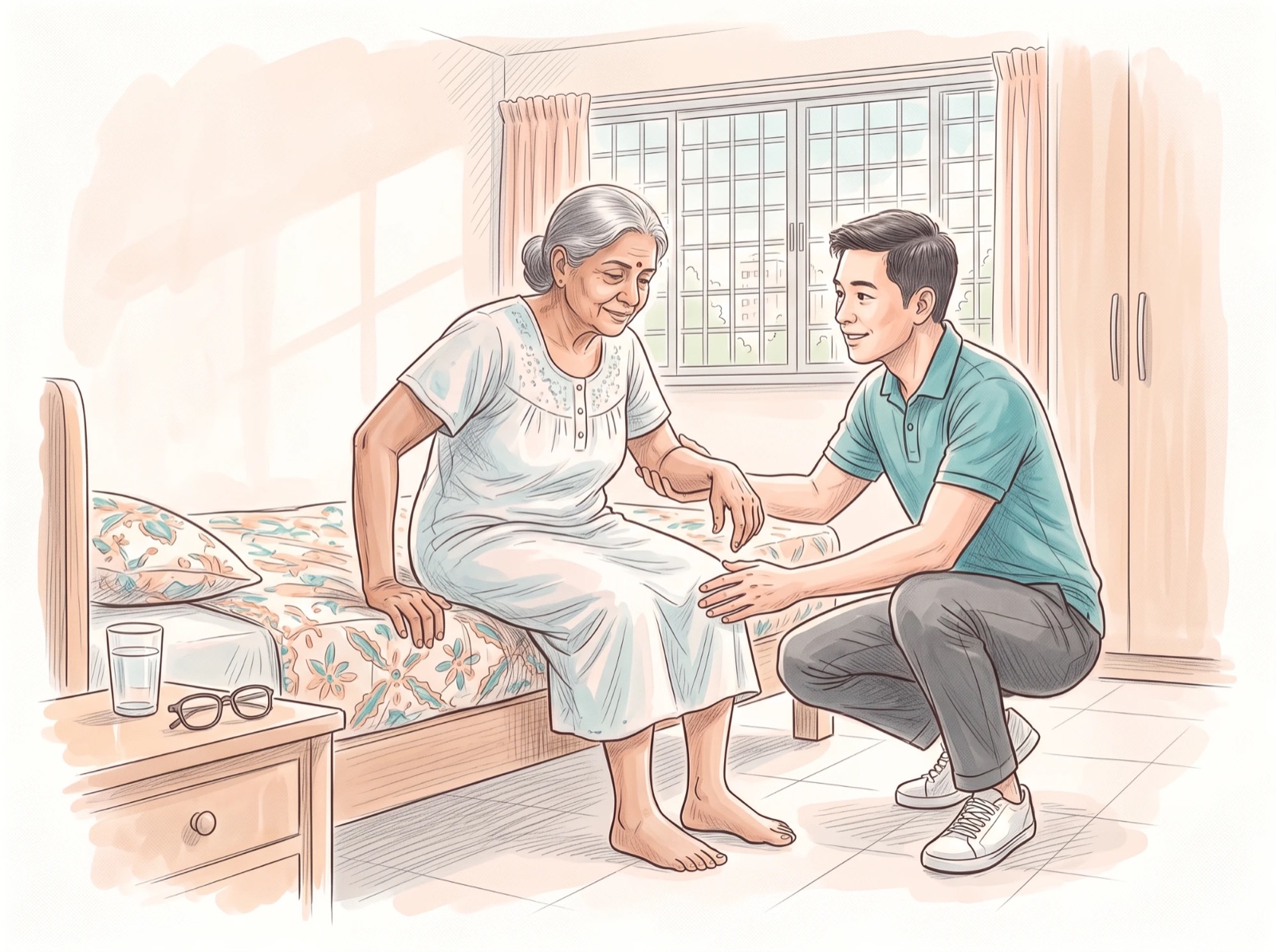
At home
Practise daily tasks where they happen:
- Getting in/out of bed
- Showering
- Moving around at home and immediate community
- Working out at the condo gym
Everything is set up in your own home, so it is easy to keep practising on your own after the session. Canada's stroke guideline says the home "provides unique opportunities to address real-life challenges and re-establish daily routines".4
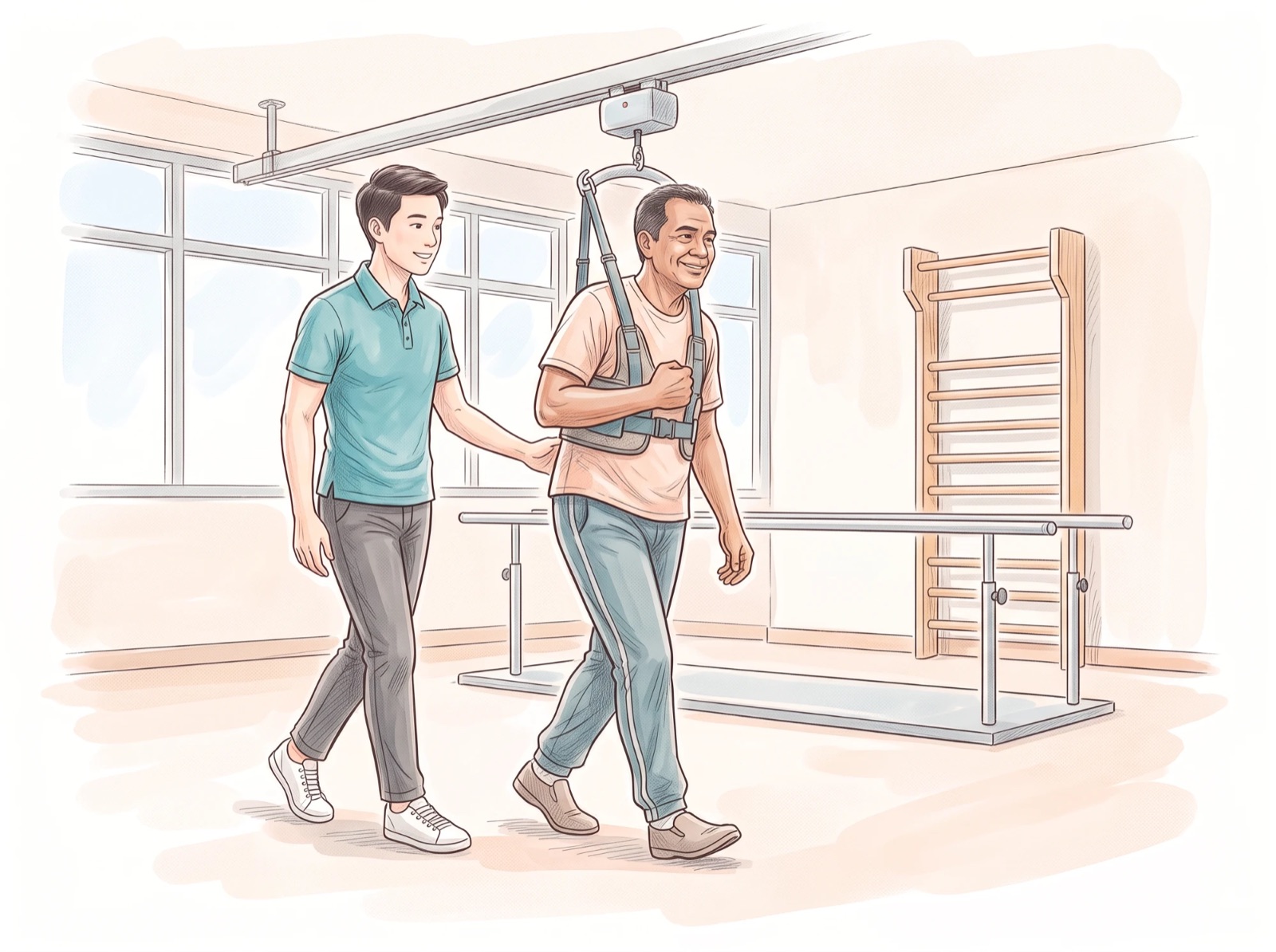
At a clinic or gym
Larger space and special equipment for intensive training. E.g.
- Pilates reformer for strength and balance
- A ceiling hoist for safe standing and walking practice
- The SaeboMAS, which supports the arm so it can be used in practice
Also suits insurance plans that cover clinic sessions only. Where clinic sessions are held →
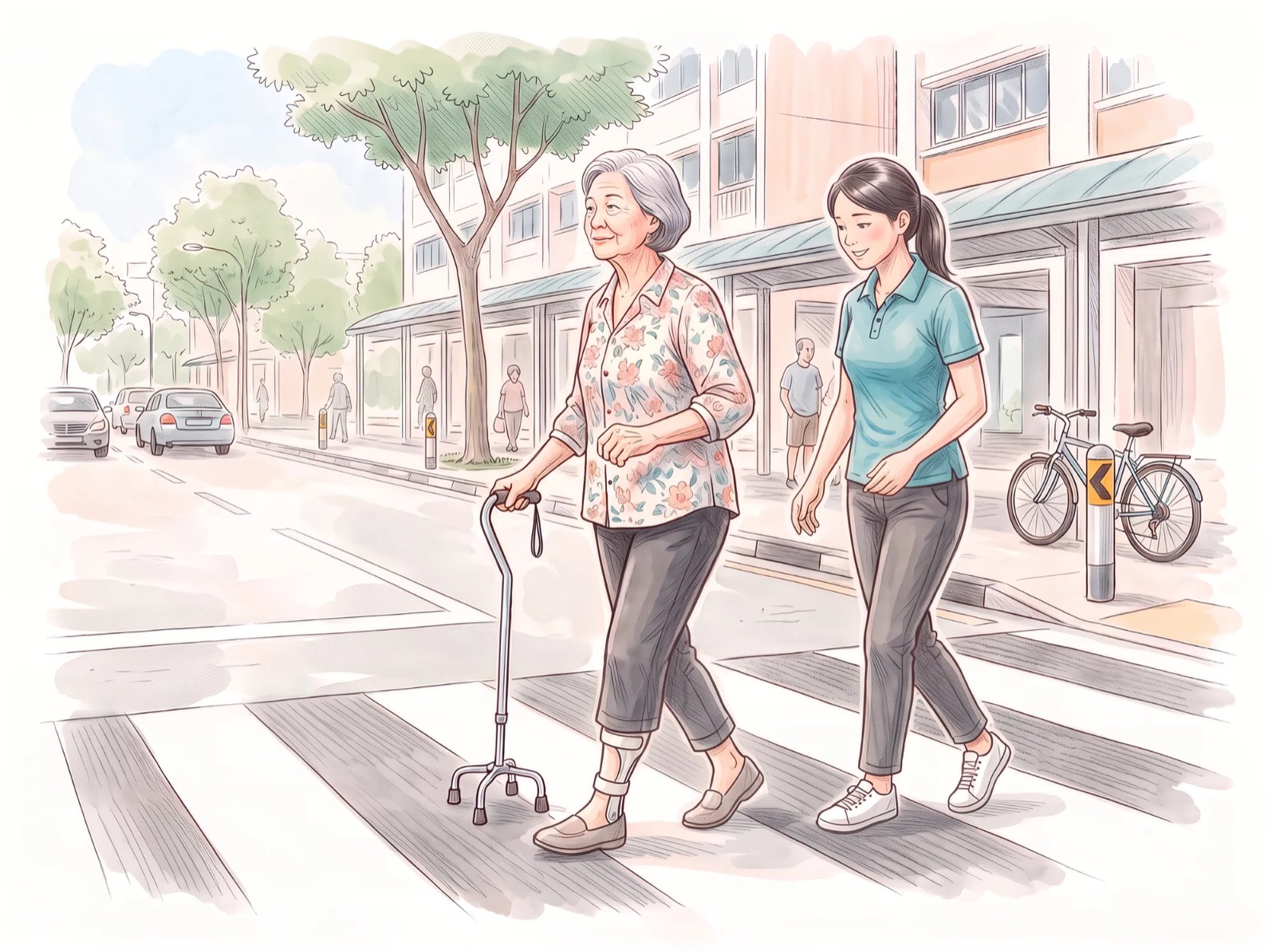
Out in the community
Practise in real-life settings:
- Taking the bus or MRT
- Crossing the road
- Going to the market
- Buying food
- Navigating the outside environment
How much rehabilitation is recommended?
Click below to look at a sample intensive week, with each therapy 2 to 3 times a week and Sunday to rest. Your plan is built around your goals, attention and energy level and your stage of rehabilitation.
Sample of intensive week
| Day | Therapy sessions |
|---|---|
| Monday | Occupational therapy (OT), acupuncture (TCM) |
| Tuesday | Speech therapy (ST), physiotherapy (PT) |
| Wednesday | OT, TCM |
| Thursday | ST, PT |
| Friday | OT, stretch therapy, counselling |
| Saturday | PT, ST |
| Sunday | Rest |
Practice between sessions is important as well: your therapists give you a home programme, and show your family how to help.3
What if this feels like too much?
We adjust the intensity of therapy to suit each person's pace. Intensive therapy is not suitable for everyone. Fatigue and depression are real difficulties after a stroke, and everyone's body is different.
Both are common. In a 2025 review of 279 studies, about 45% of people had fatigue and about 1 in 4 had depression.5 The UK guideline understands that there are people who cannot or do not wish to do 3 hours a day. However, it still recommends that any therapy they need should be offered at least 5 days a week. It also says sessions should be "tailored to any ongoing medical needs, including post-stroke fatigue", and take into account "the person's mood or motivation on the day of the session".1
Where possible, we also plan sessions for the times of day you feel most alert.3
How long should each session be?
We usually suggest 1.5 to 2 hours. For people who tire more easily, about 1.25 hours is a good start.
In our experience, a longer session gives time for sufficient repetitions, corrections and focus on movement quality and covering all areas important for recovery.
What other guidelines say
- Singapore (2026): as much scheduled occupational therapy and physiotherapy as possible.2
- Canada (Heart & Stroke, 2025), for therapy at home or as an outpatient: 60 minutes a session for each type of therapy needed, 2 to 5 days a week.4
- Practice of real tasks: practise the tasks that matter, many times over, such as reaching, gripping, standing up, walking and stairs.1,3,4 Home is where these tasks happen.
- Singapore's guideline recommends as much scheduled occupational therapy and physiotherapy as possible2
- We usually suggest 1.5 to 2 hours a session
- Your plan is built around your goals, attention and energy level and your stage of rehabilitation
Reviewed by Hai Song, Wong, Occupational Therapist (Lead Therapist).
Sources
- National Institute for Health and Care Excellence (UK). Stroke rehabilitation in adults, NG236, 2023. Recommendations 1.2.16, 1.2.17, 1.2.19, 1.13.20.
- Agency for Care Effectiveness (Singapore). Singapore Stroke Rehabilitation Guideline, 2026. Recommendation 5.
- Stroke Foundation (Australia and New Zealand). Living Clinical Guidelines for Stroke Management, Chapters 5 and 6. Summary of recommendations, June 2025.
- Heart & Stroke (Canada). Canadian Stroke Best Practice Recommendations, 7th edition, Rehabilitation, 2025. Sections 3 and 4.
- Ozkan H and others. Prevalence, trajectory, and factors associated with patient-reported nonmotor outcomes after stroke: a systematic review and meta-analysis. JAMA Network Open, 2025.